9, Sep 2026
Fabric vs. Leather Living Room Sofas Which Is Better

Picking the right material for living room sofas is an important choice for homeowners, retailers, and buyers working on projects. Fabric and leather are the two most common options. Each has its own benefits and downsides.

Working with a trusted sofa manufacturer helps ensure the materials and construction are consistently good. This is true especially for businesses buying in large quantities. Whether you choose fabric or leather affects how the sofa looks, how long it lasts, how easy it is to care for, and the overall cost. Here we will compare fabric and leather sofas. This comparison will help you to decide which one is better for your home or market.
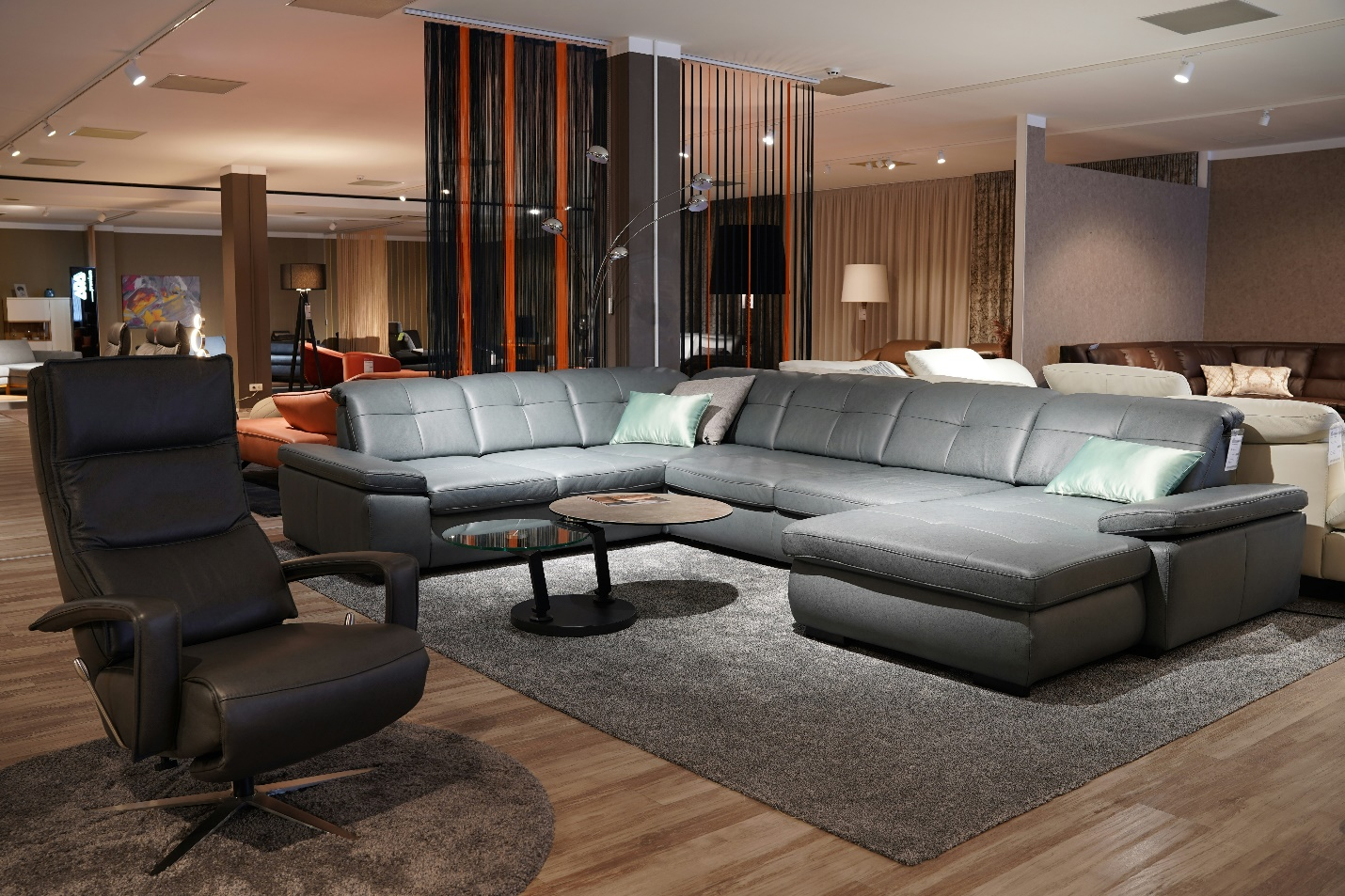
Fabric vs. Leather Living Room Sofas: Which Is Better? 1 

Basics of Fabric and Leather Living Room Sofas You Need to Know About

Knowing the basics about fabric and leather is the first step to making a good choice. A good living room sofas manufacturer carefully treats leather to make it stronger and more comfortable. This treatment helps prevent cracks and damage over time.

Overview of Fabric Sofas

Fabric sofas are made with woven or knitted materials like polyester, cotton blends, linen, velvet, or special performance fabrics. These come in lots of colors, textures, and patterns. Many sofa makers now offer performance fabrics that resist stains and fading, making fabric a smart option for busy homes and commercial spaces.

Overview of Leather Sofas

Leather sofas come in two main types including real leather and faux leather. Real leather is made from treated animal hides. On the other hand, faux leather is a synthetic material that looks and feels like real leather.

Key Things that Make Fabric and Leather Sofas Different

Fabric and leather are very different in the terms of comfort they offer, how long they last, how you take care of them, and how they feel. Fabric is made by weaving natural or synthetic fibers together. On the other hand, leather comes from treated animal hides.

Leather usually lasts longer and is easier to clean. However, it costs more and can feel hot or cold depending on the temperature. Here we will have a detailed comparison of fabric and leather living room sofas to understand their differences.

Comfort and Feel

Comfort is usually the first thing people notice when picking a living room sofa. Fabric feels soft and warm to the touch. It does not get too hot in summer or too cold in winter. This makes it a good choice for different climates. Fabric sofas are cozy for sitting a long time and often feel relaxed and casual. These are perfect for homes with kids.


Leather sofas usually feel firmer at first. Over time, real leather softens and develops a nice natural texture. Leather is smooth and does not hold onto dust easily. However, it can feel cool or a bit sticky in very hot or cold weather. Living room sofa manufacturers can adjust the cushion filling and firmness to make sofas more comfortable, depending on what customers want.

Maintenance and Cleaning

Taking care of fabric and leather sofas is different. Fabric soaks up spills quickly. So, it is important to blot spills right away. Some fabric sofas have removable covers that make washing easier.

Regular vacuuming helps to keep dust away, and stain-resistant fabrics make cleaning even simpler. Leather is easier to clean because you can usually wipe spills off with a soft cloth. But leather needs occasional conditioning to keep it soft and prevent cracks. Most sofa makers give care tips to help furniture last longer.


Look and Style Options

Style is a big part of choosing the right sofa. Fabric offers many design choices. Fabric sofas come in lots of colors, patterns, and textures. This makes fabric a great option for casual or modern homes. Sofa makers can even customize the fabric and colors to fit your style or project.

Leather has a classic and high-end look. Leather has a natural texture that gives sofas a sleek, timeless feel. It is perfect for luxury homes, offices, and executive spaces. While leather does not come in as many colors as fabric, its smooth surface makes a strong style statement.

Cost Comparison

Price is an important factor when choosing a sofa. If you are buying in bulk, working directly with a sofa manufacturer can help you find the right balance between price and quality.


  • Starting Price: Fabric sofas usually cost less to buy. Leather sofas, especially real leather ones, tend to be more expensive because the materials cost more.
  • Long-Term Value: Even though leather sofas cost more upfront, they often last longer, which can save money over time. Fabric sofas might need to be replaced sooner depending on how much they are used.

Durability Comparison: How long Fabric and Leather Living Room Sofas Last?

How long a sofa lasts is important for both homeowners and businesses. You need to get the living room sofas that come with the material that should not be worn out with regular use in a short time.

Fabric Sofa Durability

How long fabric sofas last depends on the quality and strength of the fabric. Performance fabrics resist wear and stains, making them great for busy homes. However, cheaper fabrics might fade or get little balls of fabric after heavy use. Buying from a trusted sofa maker helps avoid these problems.

Leather Sofa Durability

Real leather is very durable and can last for many years if you take care of it. It does not tear easily, but can get scratches from sharp objects. Regularly treating or conditioning leather helps keep it soft and prevents cracks from forming. That is why leather is often chosen for hotels and high-end spaces where long-lasting furniture is needed.

What Works Best for Commercial Projects?

Different places have different needs when it comes to living room sofas. A good sofa manufacturer can provide both fabric and leather options.. This is making sure each sofa is built well no matter the material.

  • Leather sofas are popular in hotel lobbies and executive offices because they look elegant and are durable.
  • Fabric sofas are common in apartments and family homes because they offer more design options and feel cozy.

FAQs

Which lasts longer, fabric or leather sofas?

Real leather usually lasts longer if you take good care of it. However, high-quality performance fabrics can also be very durable for living room sofas.

Are fabric sofas harder to clean than leather ones?

Fabric soaks up spills faster, though stain-resistant fabrics make cleaning easier. Leather is easier to wipe clean but needs regular conditioning to stay in good shape.

Do leather sofas crack over time?

Leather can crack if it is not cared for properly. Regular conditioning helps to keep the leather soft and prevents cracks.

Why should I buy from a professional living room sofa manufacturer?

A professional living room sofa manufacturer provides tested materials and strong frame construction. They also provide consistent product quality for both residential and commercial use.

Conclusion

There is no one-size-fits-all answer to whether fabric or leather sofas are better. The best choice depends on how you will use the sofa, your style, the climate where you live, and your budget.

Fabric sofas are soft, come in many colors and patterns, and usually cost less. Leather sofas are strong, easy to clean, and have a timeless, elegant look. Both can be great choices when you buy from a trusted sofa maker. Whether you are buying for your home or a business, knowing the differences will help you pick the sofa that is right for you.
9, Sep 2026
No-Compromise Material Lift: HYNEE AML7.5/6/4.5/3 Small Mast Material Lift – Stopping Subtle Squeaks with Craftsmanship

Industry Background & HYNEE’ Quality Control Positioning

Indoor aerial work platforms and supporting material handling equipment are specialized tools for tasks such as warehouse loading/unloading, factory renovation, venue modification, storage ceiling construction, and indoor equipment installation and maintenance. They are primarily used in enclosed spaces, narrow working conditions, and fine-tuned operations. Among these, the small mast material lift is widely used for material replenishment between warehouse racks and for multi-floor transport due to its compact structure, excellent maneuverability, and stable lifting performance.

Unlike outdoor equipment that focuses on rough-terrain and heavy-load capabilities, a small mast lift for warehouse or indoor use must excel in smooth operation, low noise, and vibration-free performance. As an original factory long dedicated to the R&D and export of aerial work platforms and material lifts, HYNEE has shipped its equipment to many countries and regions worldwide. The core product in this technical upgrade is the HYNEE AML7.5/6/4.5/3 small mast material lift (hereinafter referred to as the “material lift”).

2. Subtle Squeak – An Industry-Overlooked Detail

During extensive follow-up visits to warehouse and indoor worksites, the HYNEE technical team discovered a very subtle common issue in some conventional small mast lifts (including early batches of the AML series): when the lift descends slowly under load, the winch assembly occasionally produces a slight, sharp squeak.

After numerous real-world tests and structural inspections, they confirmed that this squeak is completely unrelated to safety – it does not affect rated load capacity, structural stability, or normal use. Because it does not impact basic function or safety, most manufacturers do not list it as a necessary improvement. However, under HYNEE’ quality control standard, precision warehouse equipment must never be “just good enough.” We took the initiative to launch a dedicated refinement upgrade to completely eliminate this subtle squeak in the material lift.

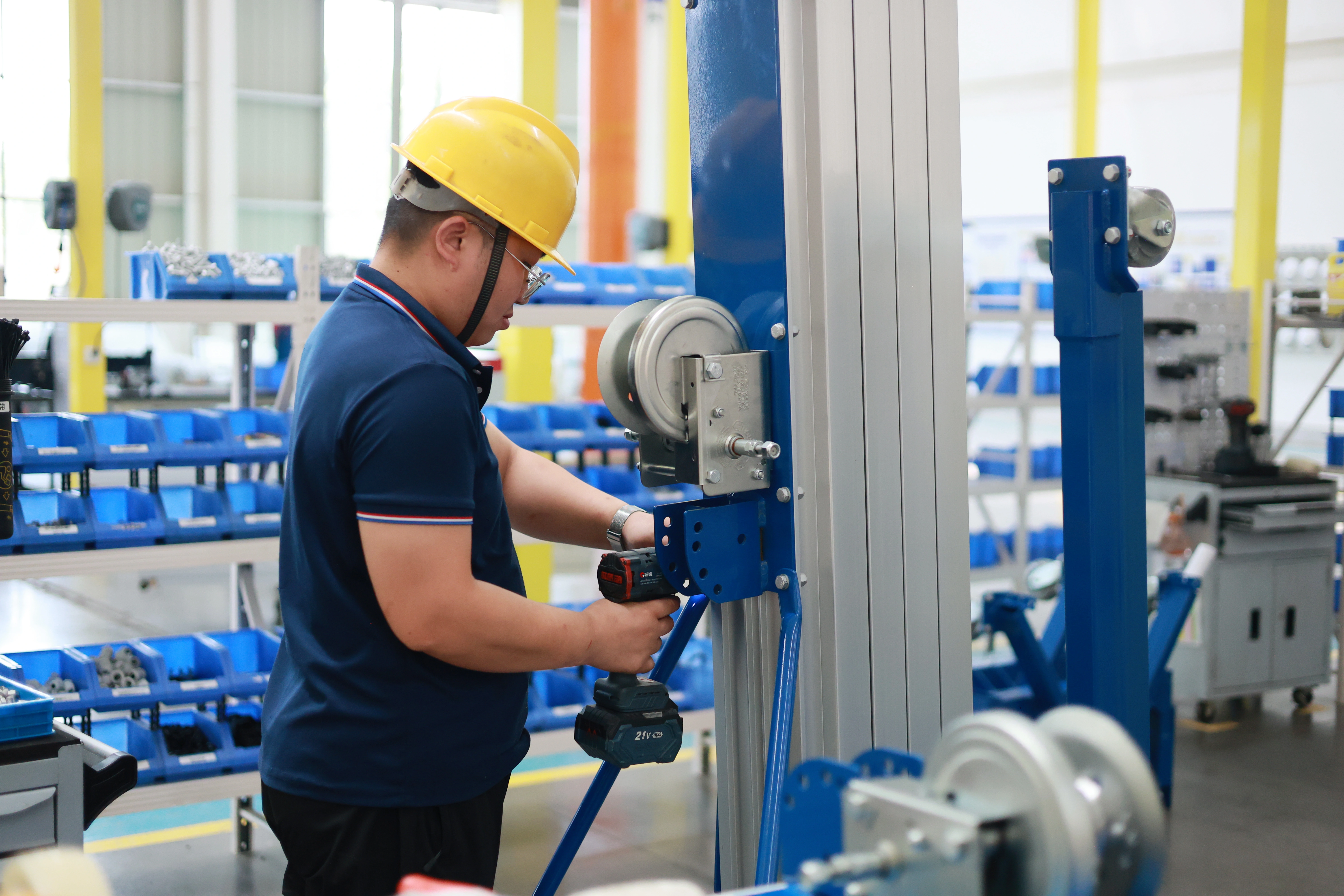
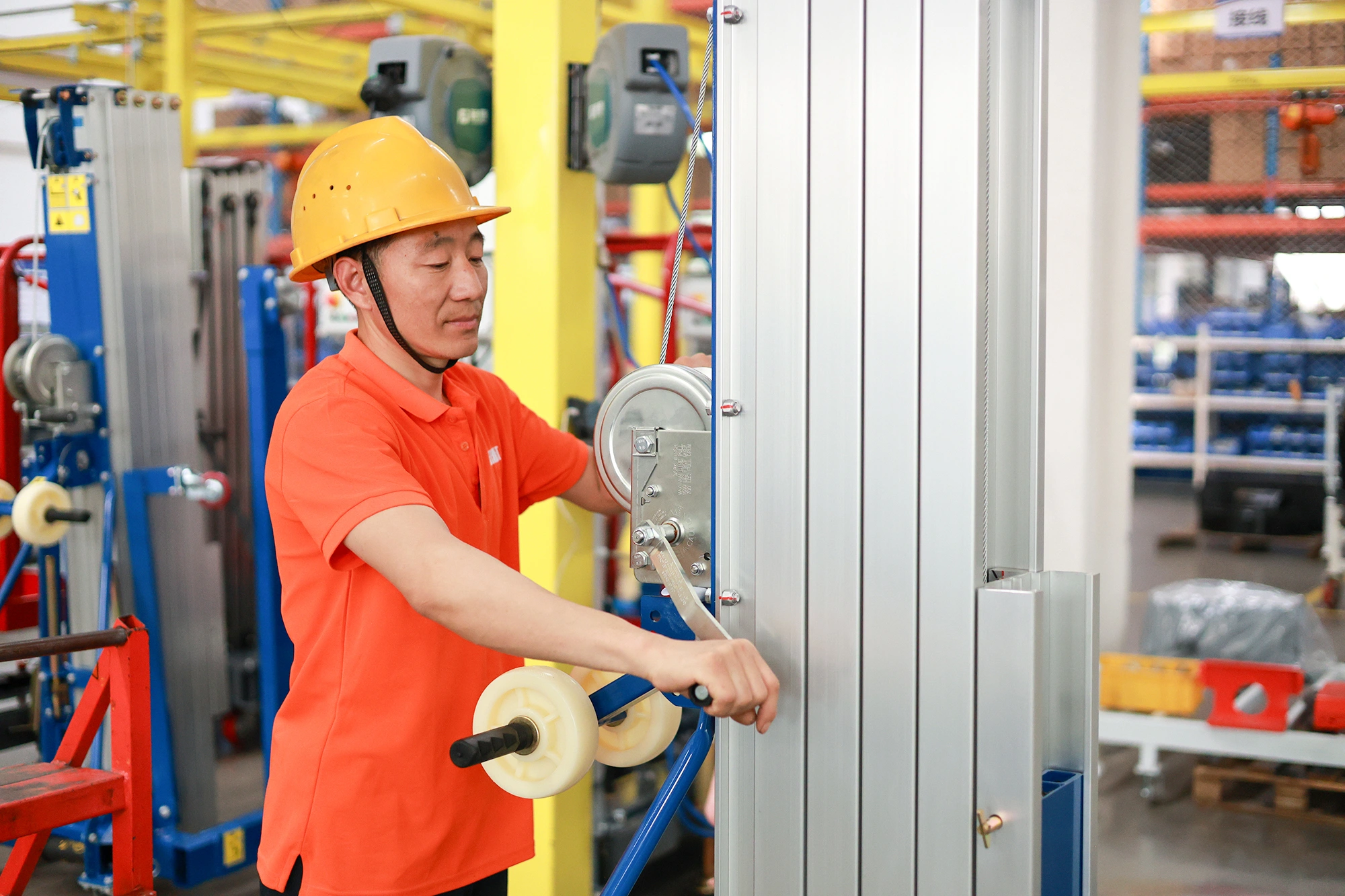
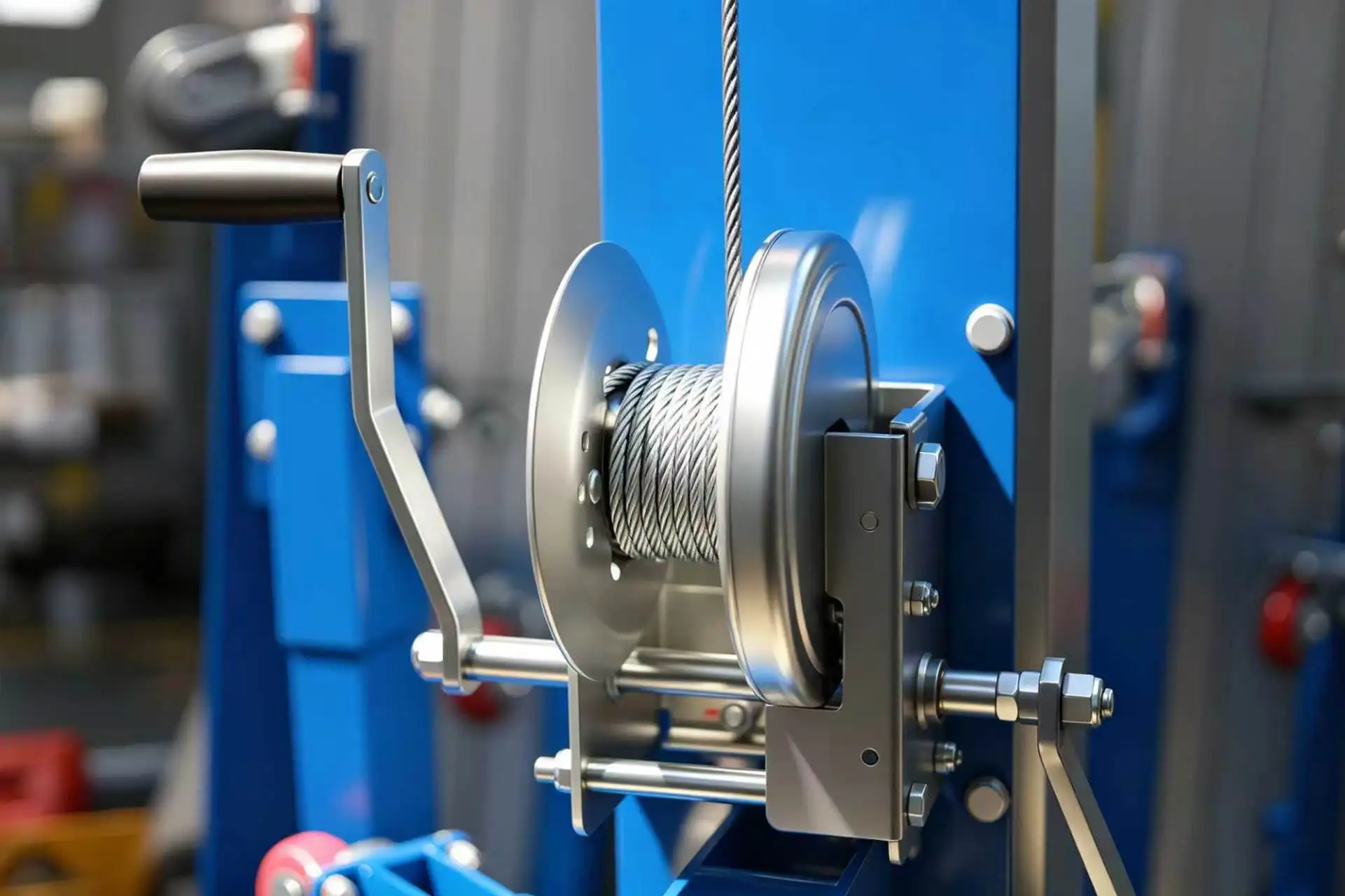
Winch Actual Footage on AML

3. Winch Working Principle & Root Cause Analysis

The winch assembly is the core transmission component that enables vertical lifting of the material lift. It directly determines how smooth and quiet the lift is during warehouse operations.

Unlike winches on outdoor equipment that emphasize high strength and heavy loads, the winch on a warehouse material lift operates mostly in low-speed, precision start/stop, and frequent load-switching conditions, relying on the coordinated movement of its drum, bearings, and transmission structure. After repeated long-term operation, conventional designs may develop tiny clearance deviations or localized lubrication degradation, which can produce a slight friction squeak during load descent. This is a detail-level fit imperfection, not a safety hazard – a minor drawback that has long existed in the industry but is often overlooked.

No-Compromise Material Lift: HYNEE AML7.5/6/4.5/3 Small Mast Material Lift – Stopping Subtle Squeaks with Craftsmanship 2

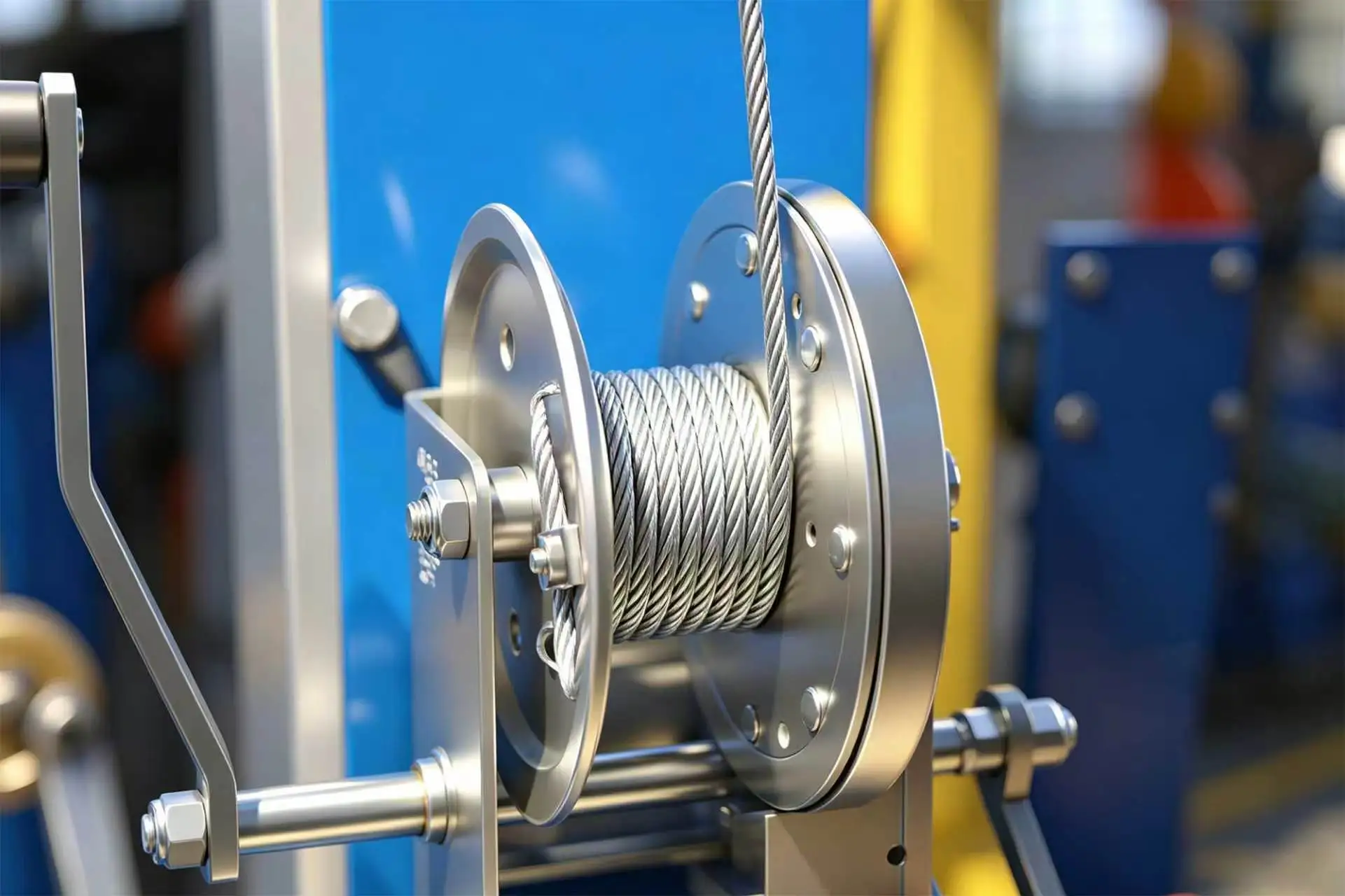
4. Precision Modification: Adding a Wear-Resistant Copper Sleeve & Upgraded Lubrication

Resolving this squeak was not a complex technical challenge – it is simply a matter of precision fit and lubrication detail. HYNEE always puts user experience first and does not hesitate over minor cost. To permanently eliminate this slight imperfection, we conducted multiple rounds of in-depth technical discussions and solution reviews with our core suppliers. After repeated testing, analysis, and joint validation, we finalized the following two precision optimization measures:

Adding a high-wear-resistant dedicated copper sleeve: precisely calibrates the fit clearance between components and eliminates direct metal-to-metal friction noise.

 Fully upgrading the lubrication system: refines lubrication points and enhances lubrication effectiveness to ensure the winch operates more smoothly and quietly under all aerial work platforms manufacturer ing conditions.

Winch Installation

During the implementation process, the HYNEE supply chain team, relying on standardized supplier management procedures, established a clear feedback mechanism covering sample trial production, on-machine verification, and batch introduction. Every change was technically confirmed and reviewed by both parties, ensuring the optimization measures were scientific, controllable, and traceable. This upgrade is not only a product improvement but also a true reflection of HYNEE’ ability to scientifically coordinate supplier resources and drive professional collaboration.

5. Extreme Testing: Verifying Reliability with 400kg Overload

Even though this was only a minor noise optimization (non-safety and non-functional), HYNEE still adhered to its strict quality control standards. To ensure the imperfection was completely removed, the technical team conducted a two-week, 300-cycle gradient extreme overload simulation test, with load limits raised to 400kg (far exceeding the rated capacity):

Replicated various complex warehouse working conditions, including frequent start/stop, extreme overload, and continuous full-load lifting.

Monitored noise reduction and operational stability throughout.

After each test cycle, disassembled and inspected wear on the winch mating surfaces and lubrication status.

After multiple rounds of real-world testing, the subtle squeak was completely eliminated with zero recurrence. The overall operating quality of the material lift was significantly improved, and all core performance parameters now exceed industry standards.

Winch on a Material Lift

6. Craftsmanship Culture: Details Make the Difference, Striving for Excellence

In the material lift industry, most brands focus on hard indicators like safety and load capacity – as soon as those are met, they stop digging into detail-level user experience. But HYNEE’ core competitiveness lies in our pursuit of excellence and an obsessive attention to detail. This upgrade was not a necessary repair – it was a proactive quality enhancement.

We firmly believe that true “intelligent manufacturing in China” does not overlook any minor defect, nor settles for any less-than-perfect user experience. After years of deep industry experience, HYNEE hones every machine with extreme quality control and uses small detail gaps to create big quality gaps.

7. Corporate Vision: Bringing Chinese Precision Engineering Quality to the World

Going forward, HYNEE will continue to uphold a culture of relentless improvement, putting user experience at the core and detail quality as the foundation. We will keep refining and upgrading our products iteratively. We will not ignore any subtle flaw, nor compromise on any aspect of user experience – forging precision products with ultimate craftsmanship and empowering global markets with rigorous quality control. Let Chinese precision engineering quality reach every warehouse and construction site worldwide.

Need the full spec sheet?

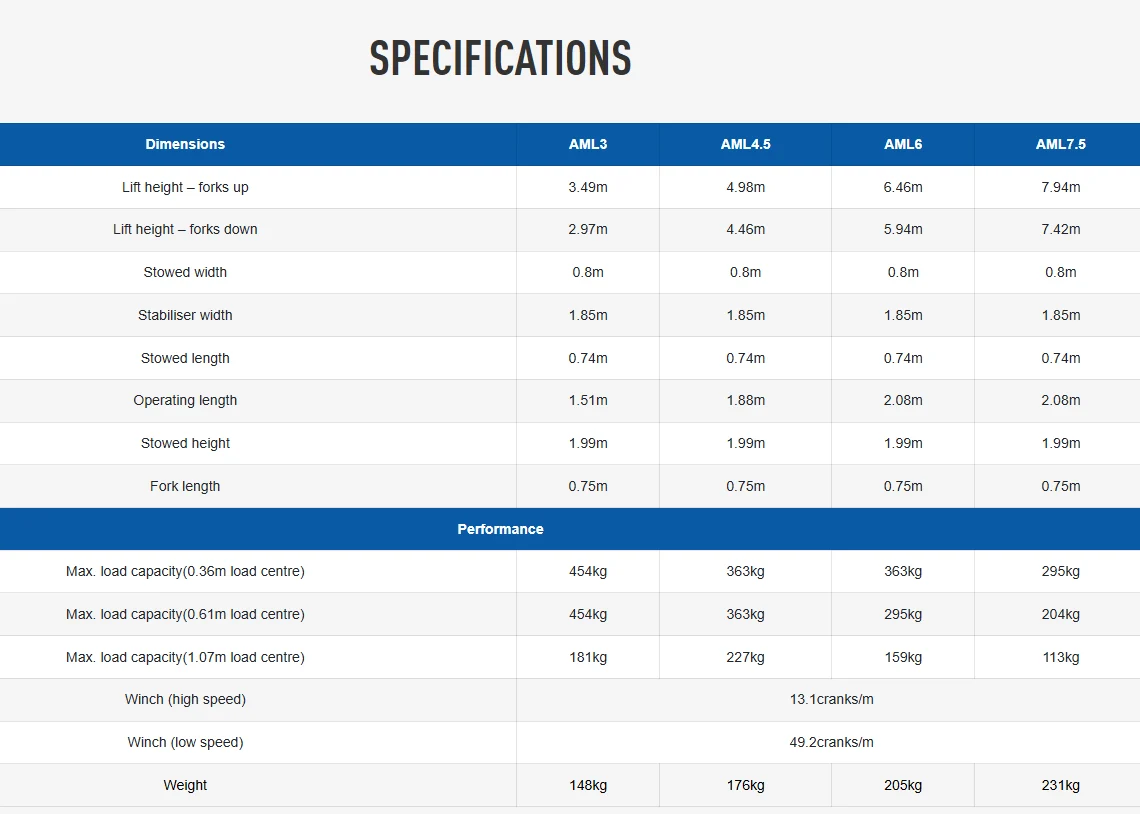
The AML7.5/6/4.5/3 series comes in four models with rated loads from 150kg to 300kg. For a complete specification sheet including detailed dimensions, lifting speed, power options, and shipping information, please contact our team.

No-Compromise Material Lift: HYNEE AML7.5/6/4.5/3 Small Mast Material Lift – Stopping Subtle Squeaks with Craftsmanship 5